Connect With Us

Please share – it really helps

Conforming loan limits determine maximum conventional borrowing by location. Check 2026 limits to understand jumbo loan thresholds.

Conforming Loan Limits Explained

Insight into the conforming loan limits, helping borrowers navigate their mortgage choices.The Federal Housing Finance Agency has announced new conforming loan limits for 2026. These changes expand purchasing power for homebuyers using conventional loan limits and represent a significant shift in the mortgage lending landscape. The adjustments reflect the ongoing appreciation of home values across the United States and directly impact how much money borrowers can access through government-backed conventional financing programs.

For homebuyers and real estate investors, understanding these limits means the difference between qualifying for a standard mortgage and needing to pursue jumbo financing. The max conforming loan amount determines which properties fall within reach of mainstream lending products and which require alternative approaches.

Understanding the 2026 Conforming Loan Limit

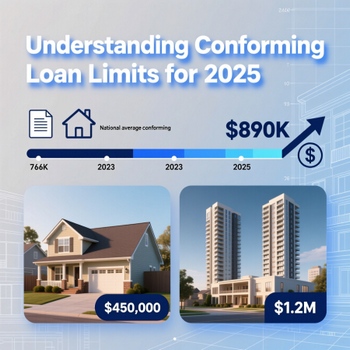
What is a conforming loan limit? The conforming loan limit is the maximum mortgage amount that government-sponsored enterprises Fannie Mae and Freddie Mac can purchase or guarantee. For 2026, the baseline conforming limit for a single-family home increases to $832,750, up from $766,550 in 2024.

This adjustment reflects rising home values across the country and directly impacts the maximum conforming loan amount available to borrowers seeking a conventional mortgage. The increase provides expanded access to affordable financing options for buyers in markets where property values have appreciated significantly over the past year.

How 2026 Conforming Loan Limits Are Determined

The Federal Housing Finance Agency calculates these limits annually using October-to-October House Price Index data. When median home values increase, the conforming mortgage limit typically follows. This system maintains accessibility to affordable mortgage products even as housing prices appreciate.

What does conforming loan limit mean for practical purposes? It establishes the boundary between standard conventional financing and jumbo loan territory. The formula used accounts for regional price variations and ensures that borrowers in different markets have appropriate access to government-sponsored financing options.

High-Cost Area Adjustments

Certain regions with expensive real estate markets qualify for higher conforming loan limits. For 2026, these high-cost areas can have limits up to 150% of the baseline, reaching $1,203,975 for single-family properties. Locations in California, New York, Hawaii, and the Washington D.C. metropolitan area often receive these elevated thresholds.

You can check the specific mortgage lending limits for your county. The max conforming loan limit 2026 varies significantly by location, making it essential for buyers to verify their specific area's threshold before beginning their home search.

Conforming Loans Versus Jumbo Loans

When a mortgage exceeds the conforming loan limit for a specific area, it becomes a jumbo loan. This distinction significantly affects the borrowing process and available terms.

  • Conforming loans follow standardized guidelines from Fannie Mae and Freddie Mac, providing predictable qualification requirements
  • Jumbo loans cannot be purchased by these government-sponsored enterprises, leading to stricter underwriting standards
  • Jumbo financing typically requires higher credit scores and larger down payments than conforming alternatives
  • Interest rates may differ between conforming and jumbo products, with jumbo loans often carrying higher rates

Understanding these differences helps borrowers select the appropriate mortgage program for their financial situation. The conventional loan limit serves as a dividing line that determines which set of rules applies to your financing.

Advantages of Conforming Loans

Conforming loans offer several benefits that make them attractive to homebuyers and real estate investors. These advantages stem from the standardized nature of the products and the backing provided by Fannie Mae and Freddie Mac.

Competitive Interest Rates

Because Fannie Mae and Freddie Mac can purchase these loans, lenders face less risk. This security often translates to lower mortgage interest rates for qualified borrowers compared to non-conforming alternatives. The rate advantage can save borrowers thousands of dollars over the life of their loan.

Flexible Down Payment Options

Many conforming loan programs accept down payments as low as 3%. Special programs like the Conventional 97 home loan and 97 LTV conventional loan make homeownership more accessible with minimal down payment requirements.

These low down payment options help first-time buyers enter the market sooner without needing to save massive amounts for a traditional 20% down payment.

Standardized Qualification Process

Conforming loans follow established guidelines for income requirements, credit score requirements, and debt-to-income ratios. This consistency helps lenders process applications more efficiently and provides borrowers with clear benchmarks for qualification.

Specialized Conforming Loan Programs

Several mortgage products operate within conforming loan limits while addressing specific borrower needs. These programs expand access to homeownership for buyers who might struggle with traditional financing requirements.

Low Down Payment Options

Borrowers with limited savings can explore programs requiring only 3% down, such as HomeReady mortgages and Home Possible loans. These programs often feature flexible credit score requirements and accept gift funds for down payment assistance.

Both programs work within the standard conventional mortgage loan limits and provide additional benefits like reduced mortgage insurance costs for income-qualified borrowers.

Renovation Financing

The Fannie Mae HomeStyle renovation loan allows borrowers to finance both purchase price and improvement costs within a single mortgage. This program follows standard HomeStyle renovation loan requirements while accommodating higher loan amounts for renovations.

Investment Property Loans

Real estate investors can utilize conventional loans for investment properties, though these typically require larger down payments. The conventional loan for multifamily properties falls under the same conforming loan limits but with different occupancy requirements and down payment thresholds.

Private Mortgage Insurance on Conforming Loans

When borrowers make down payments below 20%, lenders usually require private mortgage insurance. This protection covers the lender in case of default and adds to monthly housing costs.

  • PMI costs vary based on loan-to-value ratio and credit score, with higher risk profiles paying more
  • Borrowers can request cancellation once their loan balance reaches 78% of the original property value
  • Automatic termination typically occurs at the midpoint of the loan term according to federal regulations
  • Monthly PMI payments range from 0.5% to 1.5% of the original loan amount annually

Homebuyers can explore alternatives like piggyback loans to avoid PMI. Understanding when private mortgage insurance goes away helps borrowers plan for long-term savings and equity building.

2026 Limit Impact on Different Buyer Types

The increased conforming loan limits affect various segments of the housing market differently. Each buyer category experiences unique benefits from the expanded thresholds.

First-Time Homebuyers

Higher limits allow first-time buyers to consider more expensive properties while maintaining access to conforming loan benefits. Programs with low down payment requirements remain available within the new limits, making homeownership achievable for buyers with limited savings but strong income.

Move-Up Buyers

Homeowners looking to purchase more expensive properties benefit from the increased thresholds. They can avoid jumbo loan requirements while buying in higher-priced markets. These buyers should understand how many conventional loans you can have simultaneously when retaining their current property.

Real Estate Investors

Investors purchasing properties within the new limits can access more favorable financing terms. The ability to use conventional loans for second homes and investment properties expands with higher loan amounts, creating opportunities in markets that previously required jumbo financing.

Understanding FHA Conforming Loan Limits 2026

FHA conforming loan limits 2026 differ from conventional limits and are set independently by the Department of Housing and Urban Development. While FHA loans serve a different market segment, understanding both programs helps borrowers choose the most appropriate financing option. Many buyers compare the pros and cons of FHA versus conventional loans when deciding which program fits their needs.

Using a Conforming Loan Calculator

A conforming loan calculator helps borrowers determine their maximum purchasing power under the new limits. These tools account for income, debts, down payment, and interest rates to provide accurate estimates.

Prospective buyers should use the conventional loan amount limit calculator along with the debt-to-income calculator to understand their borrowing capacity. The affordability calculator provides comprehensive insights into sustainable monthly payments.

Navigating the Mortgage Process with 2026 Limits

Successfully securing a mortgage under the new limits requires preparation and understanding of the lending process. Buyers who approach the process strategically increase their chances of approval and favorable terms.

Credit Considerations

Borrowers should review their credit profiles before applying. Those with lower scores might explore rapid rescore options or consider adding a cosigner to strengthen their application.

Documentation Requirements

Lenders will verify income, assets, and employment history. Prepare to provide bank statements and other financial documents. The automated underwriting system used for conventional loans requires accurate information for efficient processing.

Financial Preparation

Beyond the down payment, borrowers need funds for closing costs and reserves. Understanding earnest money requirements and mortgage escrow accounts helps prevent surprises during closing.

Refinancing Under the 2026 Limits

Homeowners with existing mortgages might benefit from refinancing under the new conforming loan limits. Properties that previously exceeded conforming thresholds may now qualify for conventional refinancing.

Conventional Cash-Out Refinance

Borrowers can access home equity through a conventional cash-out refinance. These loans follow specific maximum LTV requirements for cash-out refinances and provide funding for home improvements, debt consolidation, or other financial needs.

Rate and Term Refinancing

Homeowners seeking better interest rates or loan terms can explore conventional refinance options. Programs like Fannie Mae RefiNow assist eligible borrowers with refinancing at competitive rates.

Planning Your 2026 Home Purchase

Prospective buyers should take strategic steps to prepare for homeownership under the new conforming loan limits. Proper planning improves approval chances and helps secure favorable terms.

Financial Assessment

Use tools like the income calculator and the conventional loan payment calculator to evaluate your position. These tools provide detailed monthly payment estimates and help buyers understand their true purchasing power.

Market Research

Understand local real estate conditions and how the new limits affect your target market. Properties that previously required jumbo financing might now qualify for conforming loans, expanding options in previously inaccessible price ranges.

Research neighborhoods, property values, and market trends to identify opportunities created by the increased limits.

Mortgage Pre-Approval

Obtain prequalification from a lender familiar with the 2026 conforming loan limits. This step demonstrates your seriousness to sellers and clarifies your purchasing power. Pre-approval provides a competitive advantage in hot markets where multiple offers are common.

The increased conforming loan limits for 2026 create opportunities for homebuyers across the country. Understanding these changes helps borrowers make informed decisions about one of life's most significant financial commitments. Whether you're a first-time buyer, move-up purchaser, or real estate investor, the expanded limits open doors to properties that may have previously required alternative financing strategies.

Frequently Asked Questions

What is the conforming loan limit for 2026?

The conforming loan limit for 2026 is $832,750 for a single-family home in most areas of the United States. High-cost areas can have limits up to $1,203,975, which is 150% of the baseline amount. These limits represent the maximum amount that Fannie Mae and Freddie Mac can purchase or guarantee.

What is the conventional loan limit for a multifamily property?

The conventional loan limit for multifamily properties increases based on the number of units. For 2026, a two-unit property has a baseline limit of $1,066,300, a three-unit property is $1,289,150, and a four-unit property reaches $1,602,950. High-cost areas receive proportionally higher limits for these property types.

How do I know if my area qualifies for a higher conforming loan limit?

You can check county-specific limits through the Federal Housing Finance Agency website or consult with a mortgage lender. Areas with median home prices exceeding 115% of the national median typically qualify for higher limits. Your lender can verify the exact limit for your target property location.

Can I use a conforming loan for an investment property?

Yes, you can use a conforming loan for an investment property as long as the loan amount stays within the limits for your area. Investment properties require higher down payments, typically 15% to 25%, and may have slightly higher interest rates than primary residence loans. The same conforming loan limits apply regardless of occupancy type.

What happens if the home I want to buy exceeds the conforming loan limit?

If your desired property exceeds the conforming loan limit for your area, you'll need a jumbo loan. Jumbo loans typically require higher credit scores, larger down payments, and more substantial cash reserves. You may also face higher interest rates and stricter qualification requirements compared to conforming loans.