7/1 ARM Mortgage: Complete Guide to Rates, Caps & Adjustments
By W.A. MacDonald, Retired Mortgage Loan Officer | Updated September 18, 2026
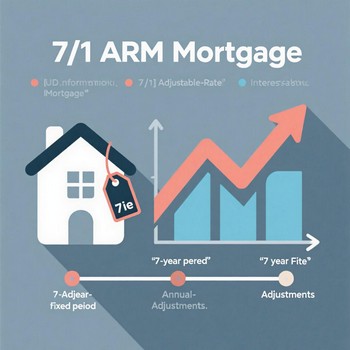 A 7/1 ARM (adjustable-rate mortgage) is a hybrid loan that locks your interest rate for seven years, then adjusts annually based on market conditions. This loan type appeals to borrowers who can capitalize on significantly lower initial rates and have a clear exit strategy—whether through a planned home sale, strategic refinance, or income growth—before annual adjustments begin in year eight. Understanding how 7/1 ARM mortgages work, their rate caps, and who should use them is essential to making an informed decision.
The primary appeal of a 7/1 ARM is straightforward: your starting rate is typically 0.5–1.0% lower than a 30-year fixed mortgage. On a $300,000 loan, this translates to $100–$300+ in monthly savings during the first seven years. However, this advantage comes with meaningful risk. After year seven, your payment could rise significantly if interest rates climb. The difference between a smart financial move and a costly mistake hinges on understanding rate caps, calculating worst-case payment scenarios, and ensuring you have a concrete plan for the adjustment period.
How a 7/1 ARM Works: Understanding the Two-Phase Structure
A 7/1 ARM operates in two distinct phases, each with different payment dynamics:
Phase 1: The Fixed-Rate Period (Years 1–7)
During this initial seven-year period, your interest rate remains locked at the rate you agreed upon at closing. Your monthly principal and interest payment is fixed and predictable, providing complete budget certainty. This extended fixed window is a significant advantage over shorter ARMs like the 5/1 ARM, which only protects you for five years before adjustments begin.
Phase 2: The Annual Adjustment Period (Year 8 and Beyond)
Starting in year eight, your interest rate adjusts once per year based on market conditions. Each adjustment is calculated using a straightforward formula:
New Rate = Market Index (e.g., SOFR) + Lender's Margin
For example, if the SOFR index is 5.2% and your lender's margin is 2.75%, your new rate would calculate to 7.95%. However, rate adjustment caps prevent unlimited increases and protect you from catastrophic payment shocks.
Understanding Rate Caps: Your Primary Protection Against Payment Shock
Rate caps are built-in safeguards that limit how much your interest rate can rise during each adjustment period and over the loan's lifetime. Every 7/1 ARM includes three distinct types of caps, and understanding these is critical to assessing whether an ARM fits your budget:
| Cap Type | Typical Range | What It Means for Your Payment |
|---|---|---|
| Initial Adjustment Cap | 2–3% | Your first rate jump (year 8) is limited. If your starting rate is 4%, it cannot exceed 6–7% on the first adjustment, regardless of where the index is. |
| Periodic Adjustment Cap | 1–2% per year | Each subsequent adjustment is capped. Rates cannot jump more than 1–2% in any single adjustment year after the initial adjustment, providing predictability for years 9 and beyond. |
| Lifetime Rate Cap | 5–6% above start | No matter what happens to market rates, your rate cannot exceed your starting rate plus 5–6%. This is your absolute ceiling and the maximum payment scenario you need to plan for. |
This is critical: Always request and review your specific rate caps in your loan estimate before signing any documents. The lifetime cap determines your worst-case payment scenario; calculate the maximum possible payment using this cap to ensure affordability even in a severe rate environment.
7/1 ARM vs. Other Mortgage Options: Detailed Side-by-Side Comparison
7/1 ARM vs. 30-Year Fixed-Rate Mortgage: Which Should You Choose?
| Feature | 7/1 ARM | 30-Year Fixed |
|---|---|---|
| Initial Interest Rate | 0.5–1.0% lower | Higher baseline rate |
| Monthly Payment (Months 1–84) | $100–$300 lower per month | Baseline (consistent throughout) |
| Monthly Payment (Year 8+) | Variable; could be significantly higher | No change; rate is locked for life |
| Budget Predictability | Guaranteed first 7 years; uncertain after | 100% predictable for 30 years |
| Best For | Home sellers, strategic refinancers, rising income earners | Long-term homeowners, conservative borrowers, budget-focused families |
| Risk Level | Moderate to high after year 7 | None; interest rate is locked |
Ready to run the numbers? Use our 7/1 ARM calculator to model exact payment differences for your loan amount, down payment, and timeline.
7/1 ARM vs. 5/1 ARM: When the Extra Two Years Make a Difference
| Metric | 5/1 ARM | 7/1 ARM |
|---|---|---|
| Fixed-Rate Period | 5 years | 7 years |
| Starting Interest Rate | Slightly lower (~0.1–0.25%) | Slightly higher to compensate |
| 7-Year Total Savings | Higher initial savings, but adjustments begin year 6 | Longer fixed period; predictable through year 7 |
| Refinance Window Risk (Year 5–6) | High—rates may have risen sharply; tight window to refinance | Lower—two extra years to refinance before adjustments |
| Best For | Definite sellers within 5 years | 5–7 year ownership or planned year 6–7 refinance |
Compare side-by-side using our 5/1 ARM calculator to see how the extra fixed years impact your total interest and payment stability.
7/1 ARM vs. 10/1 ARM: More Stability vs. Lower Rates
A 10/1 ARM extends your fixed-rate period to 10 years instead of 7. The tradeoff: the initial rate is slightly higher—typically 0.1–0.3% above a comparable 7/1 ARM. Choose a 10/1 ARM if you plan to stay 8–10 years and want maximum stability before any adjustment; choose a 7/1 ARM if you prioritize a lower starting rate and plan to refinance or sell in years 6–7.
Who Should Get a 7/1 ARM? An Honest Assessment of Ideal vs. Poor Candidates
Ideal Candidates for a 7/1 ARM Mortgage:
- Short-Term Homeowners (5–7 Year Horizon): You have a concrete plan to sell or relocate within 7 years. You capture the initial rate savings without ever experiencing the adjustment period, making this an ideal wealth-building tool.
- Strategic Refinancers: You intentionally plan to refinance into a fixed-rate mortgage in year 6 or 7, locking in favorable rates before the annual adjustment period begins. This requires active monitoring of rate markets starting in year 5.
- Rising-Income Professionals: You expect a significant salary increase, bonus, or career advancement by year 8. The lower initial payment stretches your buying power now, and higher income makes future adjustments manageable.
- Investment-Focused Borrowers: You want to minimize housing costs to free up capital for investment in stocks, retirement accounts, or real estate. The payment savings during years 1–7 become additional wealth-building fuel.
- Financially Stable with Emergency Reserves: You have 6+ months of expenses in accessible savings and can comfortably afford the maximum possible payment under your lifetime rate cap without lifestyle disruption.
Poor Candidates for a 7/1 ARM Mortgage:
- Uncertain Timeline: You're unsure whether you'll stay 7+ years or might need to stay longer. Forced adjustments or refinances in unfavorable rate environments eliminate the ARM's advantage and create financial stress.
- Tight Monthly Budget: Your current financial situation leaves little margin. A 2–3% rate jump could push payments above your affordable threshold, potentially forcing a sale or refinance under stress.
- Long-Term Owners Planning 15+ Years: You intend to stay in the home for 15+ years. A fixed-rate mortgage's predictability and protection against rate shocks is worth the higher initial rate over such a long horizon.
- Rising Rate Environment: Current market indicators suggest rates are climbing. ARMs become riskier when entering periods of rate increases; a fixed mortgage shields you from this risk.
- Limited Financial Flexibility: You lack emergency savings, have high existing debt, or face job insecurity. The uncertainty of adjustable payments compounds financial vulnerability.
Realistic 7/1 ARM Rate Caps Example: Understanding Payment Shock
Let's walk through a realistic scenario to understand how rate caps and adjustments affect your actual payment:
Scenario Setup: $300,000 loan amount, 4.0% starting rate, initial cap 2%, periodic cap 1%, lifetime cap 5.5% above start
Years 1–7 (Fixed Period): Monthly payment: $1,432 (principal & interest only; property taxes, insurance, HOA fees additional)
Year 8 (First Adjustment): Rate increases are limited to the initial cap of 2%. Even if market conditions justify a higher increase, your rate cannot exceed 6.0% (4.0% + 2% cap). New payment: approximately $1,799/month. Increase: $367/month or 25.6%.
Years 9–10 (Subsequent Adjustments): Can adjust up to 1% annually, subject to the lifetime cap. If rates continue rising, your rate moves toward the ceiling of 9.5% (4.0% + 5.5% lifetime cap).
Worst-Case Scenario (Year 10+): Rate reaches the 9.5% lifetime maximum. Monthly payment: approximately $2,410. Total increase from initial payment: $978/month or 68%.
This scenario demonstrates why worst-case planning is essential. Can you afford a $2,410 payment if rates spike? If not, an ARM carries too much risk.
Use our amortization calculator with extra payments option to model paying down principal in years 1–7. Reducing your loan balance before adjustments begin directly shrinks the payment increase you'll experience.
Payment Shock After Year 7: The Biggest 7/1 ARM Risk and How to Mitigate It
The single biggest financial threat with a 7/1 ARM is payment shock—a sudden, substantial jump in your monthly obligation when the adjustment period begins in year eight. If you're budgeting with minimal margin, this shock can force an unwanted refinance in unfavorable conditions, a home sale, or severe financial stress.
Concrete mitigation strategies:
- Aggressive Principal Paydown (Years 1–7): Use years 1–7 to pay down as much principal as possible using the extra payment calculator. Every dollar of principal paid reduces your balance and future adjusted payment dollar-for-dollar.
- Plan a Strategic Refinance: Mark year 6 in your calendar. Begin monitoring rates in year 5. If rates are favorable, refinance into a fixed mortgage before the adjustment period starts. This requires proactive rate monitoring and a clear refinance action plan.
- Build an Adjustment Reserve Fund: Save the monthly payment difference between your 7/1 ARM and a fixed mortgage in a dedicated savings account. This "shock absorption" fund cushions the transition when adjustments begin.
- Lock in the Lowest Initial Rate: Shop multiple lenders. A 0.25% difference in your starting rate translates to $500+/year in savings and reduces adjusted payment shock proportionally.
- Verify Affordable Maximum Payment: Calculate your payment at the lifetime cap rate before signing. Ensure this worst-case payment fits your budget without hardship. If it doesn't, an ARM is too risky.
Frequently Asked Questions About 7/1 ARM Mortgages
What is a 7/1 ARM mortgage and how does it work?
A 7/1 ARM (adjustable-rate mortgage) is a hybrid mortgage that locks your interest rate for 7 years, then adjusts annually based on market conditions. The "7" represents the fixed-rate period; the "1" represents the annual adjustment frequency after year 7. You enjoy a lower starting rate—typically 0.5–1.0% below a fixed mortgage—during the fixed period, then face potential payment increases when adjustments begin. This structure suits borrowers with a clear 5–7 year timeline or a concrete refinance plan.
What happens to my mortgage payment after 7 years on a 7/1 ARM?
After year 7, your interest rate adjusts once per year starting in year 8. Each adjustment is calculated as your market index rate (such as SOFR) plus your lender's margin. Your payment increases or decreases based on the new rate, subject to rate caps that protect you: an initial adjustment cap (2–3%), periodic annual caps (1–2%), and a lifetime cap (5–6% above your starting rate). For example, a 4.0% starting rate cannot exceed 9.0–10.0% over the loan's life.
What are typical rate caps on a 7/1 ARM?
Most 7/1 ARMs include three cap types: (1) Initial adjustment cap of 2–3%, limiting your first rate jump in year 8; (2) Periodic adjustment cap of 1–2% per year, limiting each subsequent adjustment; (3) Lifetime rate cap of 5–6% above your starting rate, providing an absolute maximum. Always request specific caps from your lender's loan estimate; they vary by product and lender.
How much lower are 7/1 ARM rates compared to fixed mortgages?
7/1 ARM rates typically run 0.5–1.0% lower than 30-year fixed rates, depending on market conditions, current yield curves, and lending environment. This difference translates to $100–$300+ monthly savings on a $300,000 loan during the first seven years. Use a calculator to compare your specific scenario and quantify the savings against the adjustment risk.
Should I choose a 7/1 ARM or 5/1 ARM?
Choose a 5/1 ARM if you have a definite plan to sell within 5 years—the rate is slightly lower (~0.1–0.25%), and you avoid the adjustment period entirely. Choose a 7/1 ARM if you plan to stay 5–7 years or intend to refinance in year 6–7; you get 2 extra years of rate stability and a longer refinance window. A 7/1 ARM generally offers better long-term risk management than a 5/1 for borrowers whose timeline extends to year 7 or beyond.
What is payment shock and how does it affect 7/1 ARM borrowers?
Payment shock is the sudden jump in your monthly mortgage payment when the adjustment period begins. With a 7/1 ARM, year 8 could see a $200–$500+ monthly increase if rates adjust to their caps. For example, a $300,000 loan at 4.0% costs $1,432/month; if rates jump to 6.0% at the first adjustment, payments rise to ~$1,799/month—a $367 shock. Worst-case scenarios (using lifetime caps) can double your payment. Always calculate maximum payment affordability before committing to an ARM.
Can I refinance a 7/1 ARM before the rate adjusts?
Yes. Most borrowers refinance in year 6 or 7 to lock in a fixed rate before adjustments begin. This strategy works best if prevailing rates are stable or declining. Refinancing depends on your credit score, home equity, debt-to-income ratio, and market rates at refinancing time. Planning a refinance in years 6–7 is a strategic approach many ARM borrowers use to capture initial savings while maintaining long-term payment predictability.
Who is a 7/1 ARM best for?
A 7/1 ARM is ideal for: short-term homeowners (5–7 year horizon), planned refinancers with a concrete year 6–7 refinance strategy, professionals with rising income expectations, investment-minded borrowers who want to minimize housing costs to invest savings, and financially stable borrowers with 6+ months of emergency reserves who can afford worst-case adjusted payments. If you lack these characteristics, a fixed mortgage is likely safer.
Is a 7/1 ARM better than a 30-year fixed mortgage?
It depends on your timeline and risk tolerance. A 7/1 ARM wins if you'll sell or refinance within 7 years—you capture savings without facing adjustments. A fixed mortgage wins if you're staying 10+ years; the predictability, budget certainty, and protection against rate shocks justifies the higher starting rate. Model both scenarios using our calculators to determine which structure fits your financial goals and comfort level with payment uncertainty.
Next Steps: Calculate Your 7/1 ARM Scenario
Ready to explore whether a 7/1 ARM is right for your situation? Use our 7/1 ARM calculator to model your exact loan amount, down payment, and timeline. Input worst-case rate scenarios using your lifetime cap to ensure the maximum payment fits your budget comfortably.
Not convinced an ARM is the right move? Compare it against other conventional loan programs, 5/1 ARM options, or 10/1 ARM alternatives. Our suite of calculators lets you compare side-by-side and make an informed decision based on your unique financial situation.
Connect With Us
Please share – it really helps